
“Design is not subjective.”
— Massimo Vignelli
This statement, attributed to Massimo Vignelli, may raise a few eyebrows. After all, don’t we constantly say that taste is personal? That some people prefer one colour, typeface or style over another?
Of course, a design can provoke a different reaction in everyone. But reducing design to a matter of personal preference overlooks all the thinking that goes into creating a strong visual.
Design is not decoration added at the end of a project. It is a way of organizing ideas, making a message clearer and giving a coherent form to an intention.
Who Was Massimo Vignelli?
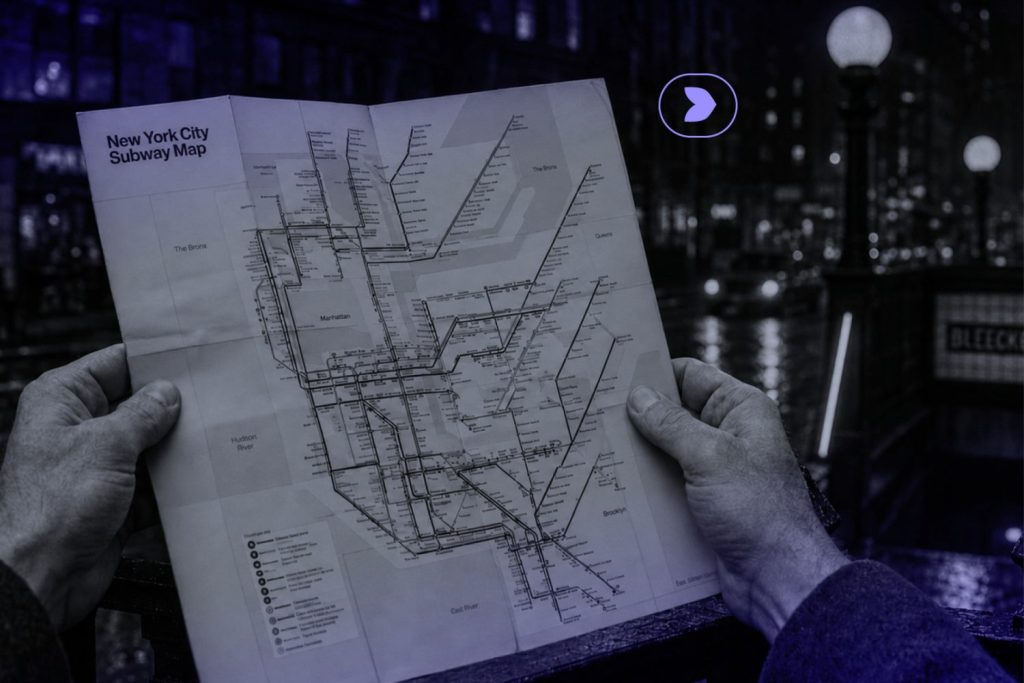
Massimo Vignelli was an Italian designer born in Milan in 1931 who died in New York in 2014. Together with his wife and creative partner, Lella Vignelli, he left a lasting mark on modern design, working across visual identity, editorial, industrial, architectural and environmental design. He is particularly known for his work on the signage and subway map of the New York City Subway, as well as iconic identities such as American Airlines. His approach was grounded in clarity, rigour, simplicity and the creation of visual systems designed to stand the test of time.
Liking It or Not Isn’t Always the Right Question
When a visual concept is presented, the first reaction is often instinctive:
“I like this colour.”
“I prefer this typeface.”
“This image feels more like me.”
These impressions are legitimate. They are part of the conversation. But they are not enough to assess whether a design is effective.
The more important question should be: does this design achieve the right objective?
Does it capture the attention of the right people? Does it express the personality of the brand? Does it make the message easier to understand? Does it stand out from the competition? Does it remain consistent when adapted across different applications?
A design may not immediately align with someone’s personal taste and still be exactly right for the brand, context and audience it is intended for.
Creativity Needs a Framework
At Studiogrif, we deeply believe in the power of intuition. An idea can emerge from a conversation, an image, a word, an unexpected contrast or a different way of looking at a problem.
But intuition is only the beginning.
To become a true creative direction, it needs to be developed, structured and tested. We need to understand what the brand wants to express, what sets it apart and what perception it wants to build.
This is where the principles of design come into play.
Hierarchy guides the eye. Proportions create balance. Contrast creates rhythm. Typography establishes personality. Colours evoke associations. White space gives the message room to breathe.
These elements are not placed randomly. Together, they form a language.
And like any language, it needs to be clear, consistent and recognizable.
Creating Means Making Choices—and Knowing How to Defend Them
Good design is not an accumulation of visual effects. It is often built through a series of precise decisions, some of them almost invisible.
Why is this word larger?
Why this photograph rather than another?
Why leave more space around this element?
Why use a bold colour in this particular place?
Why remove something instead of adding more?
At Studiogrif, our role is not simply to present an attractive proposal. It is also to be able to explain the decisions behind it.
Every choice should support the concept, the brand identity and the experience of the person encountering the message.
That does not mean a design can never evolve. Quite the opposite. Dialogue with our clients is an integral part of the process. It helps clarify an intention, reveal a nuance or enrich an idea.
However, the most meaningful adjustments do not come from personal preference alone. They come from a shared reflection on what the design needs to accomplish.
Our Commitment: Going Beyond Beauty
After 20 years of working alongside organizations and brands, we know that a strong visual identity is not built through talent or good tools alone.
It requires listening, curiosity and a great deal of commitment.
You need to take the time to understand a company, its history, its ambitions and sometimes even the ideas it has not yet found the words to express clearly. You need to explore, experiment, question and start again until you find a direction that feels both obvious and distinctive.
That is the part of the process that fascinates us.
We are not looking to follow a formula or reproduce a trend. We want to create a visual world that truly belongs to the brand and gives it the tools to communicate with greater consistency, confidence and impact.
Design then becomes much more than appearance. It becomes a strategic tool.
Good Design Speaks for Itself
Design involves a degree of sensitivity, but it should never be arbitrary.
When a design works, its elements speak to one another. The eye instinctively understands where to look. The message becomes more accessible. The brand feels more confident. The whole thing feels natural, even though dozens of decisions may have been required to achieve that simplicity.
Perhaps this is where Vignelli’s thinking most directly connects with our own perspective.
Creativity is not the absence of rules. It is the ability to understand principles, master them and know when to use them, transform them or challenge them.
At Studiogrif, we create with sensitivity, but also with intention. We stand behind the ideas we believe in and commit ourselves to every project to build visual worlds that are not only beautiful today, but relevant for years to come.
Because ultimately, good design shouldn’t simply make people say “I like it.” It should make them understand, feel and act.
Sources
Cooper Hewitt — Remembering Massimo Vignelli (1931–2014)
Art Directors Club Hall of Fame — Massimo Vignelli
https://creativehalloffame.org/inductees/massimo-vignelli-adc/